Zero-touch, audit-ready IT operations: How enterprises govern processes end to end
IT automation has evolved quickly, but IT governance hasn’t kept up.
Enterprises today run dozens of systems, hundreds of workflows, and thousands of routine operational tasks, each needing approvals, documentation, and traceability.
Yet, many of these processes still rely on manual steps, fragmented tools, or individual knowledge. The result is predictable: audit gaps, compliance misses, unclear ownership, and operational risk.
Qntrl is built as an orchestration and governance layer that helps enterprises standardize IT operations, enforce controls, and deliver audit-ready processes without slowing teams down. Instead of stitching together scripts, emails, and legacy approval workflows, Qntrl provides IT with a structured environment to design, automate, and monitor work from end to end.
Why IT governance is falling behind automation
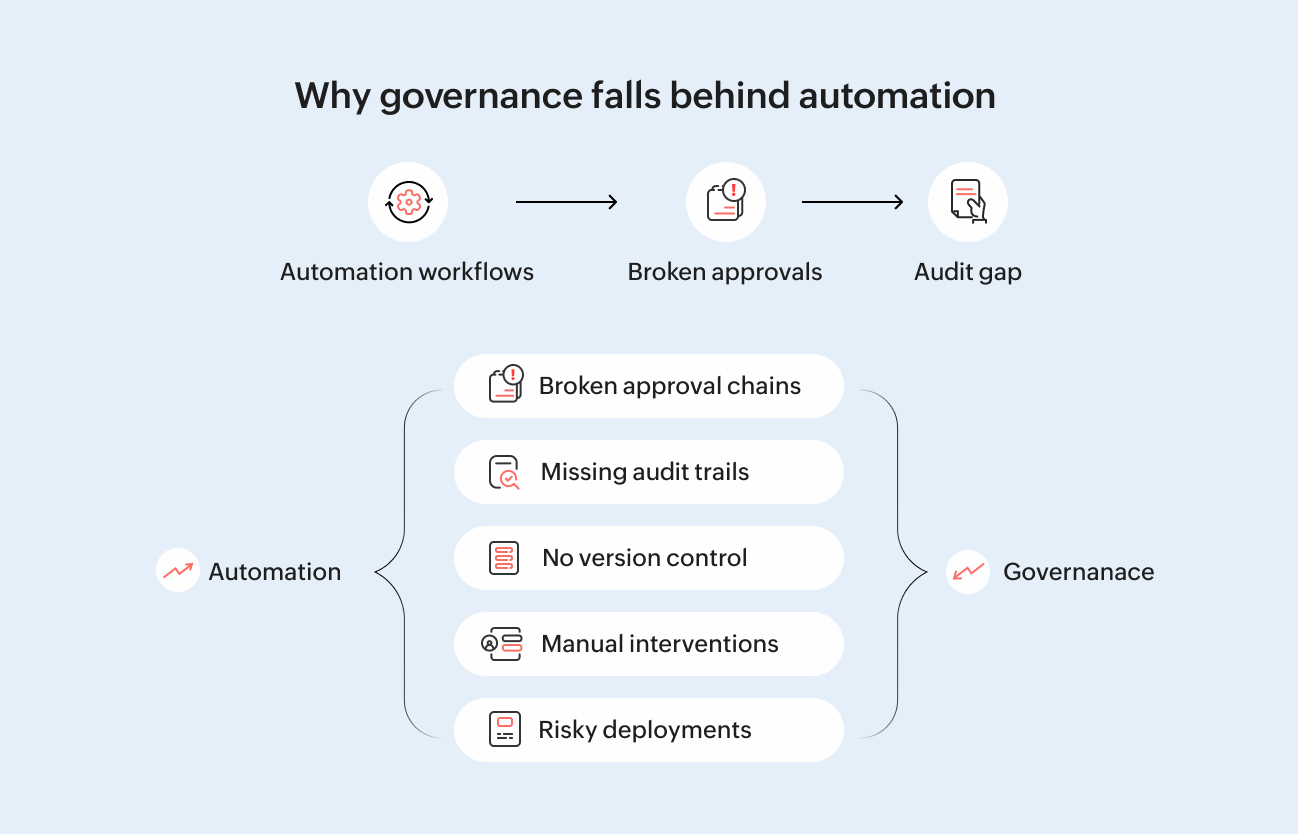
Most enterprises have automated parts of their IT operations, but not the governance around them.
This causes gaps in visibility and control, especially when:
- Approvals happen over email or chat
- There's no single source of truth for who did what
- Systems rely on fragile point-to-point integrations
- Changes go live without proper testing
- Documentation trails are incomplete or missing
- Every audit cycle turns into a scramble to reconstruct what happened
IT teams often end up playing catch-up instead of proactively enforcing compliance. Processes that should be standardized get reinvented for every team. Critical steps get skipped under time pressure. And despite decent tooling, teams struggle to provide a full audit story.
Qntrl solves this by embedding governance directly into the workflow, with every step logged, every action controlled, and every outcome visible.
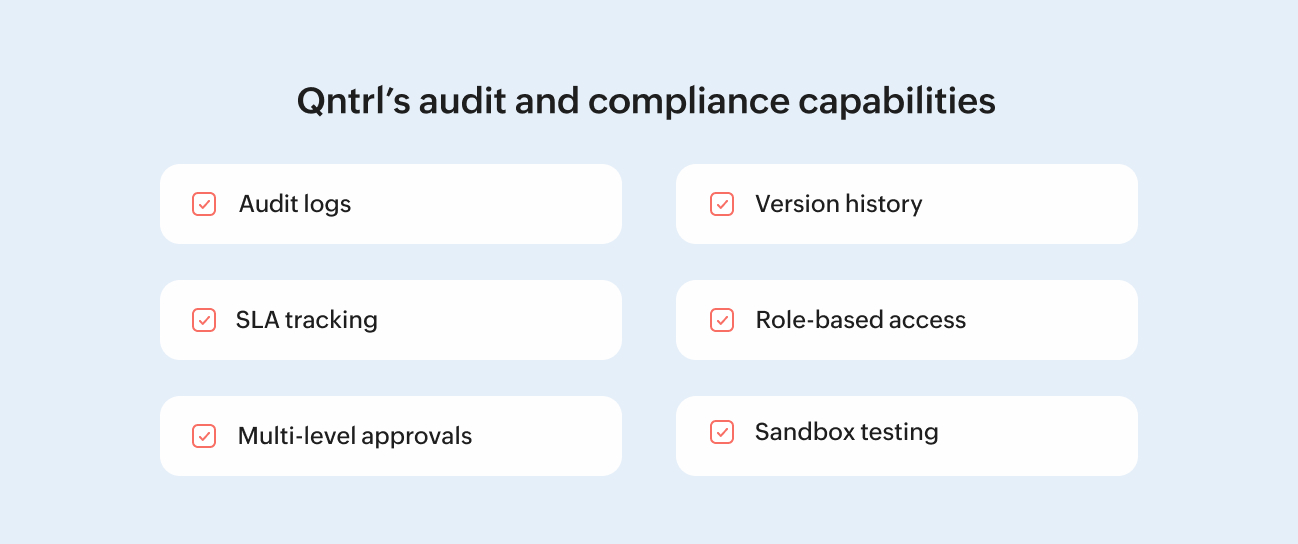
Common governance challenges enterprises face
Untracked approvals and inconsistent workflows
Many IT processes require multiple checks, like security reviews, role-based approvals, vendor validations, and policy checks; however, when these occur informally, process managers or teams lose visibility, and clarity is compromised.
Lack of traceability for audits
Auditing pain points: Who approved this? When? Was a risk evaluation done? Was a change validated?
Most teams spend hours recovering this information manually.
No version control for process changes
A workflow modified mid-cycle leads to mismatched behavior, unpredictable execution, and compliance issues.
Manual checkpoints across IT teams
User access requests, change requests, provisioning tasks, and configuration updates often get stuck because they depend on humans to initiate and complete them.
Risk from untested automation
IT teams often push changes directly to production because they lack a secure sandbox for validating updates.
These gaps create operational debt, including slow work, missing documentation, and audit failures.
How Qntrl fixes audit and governance challenges
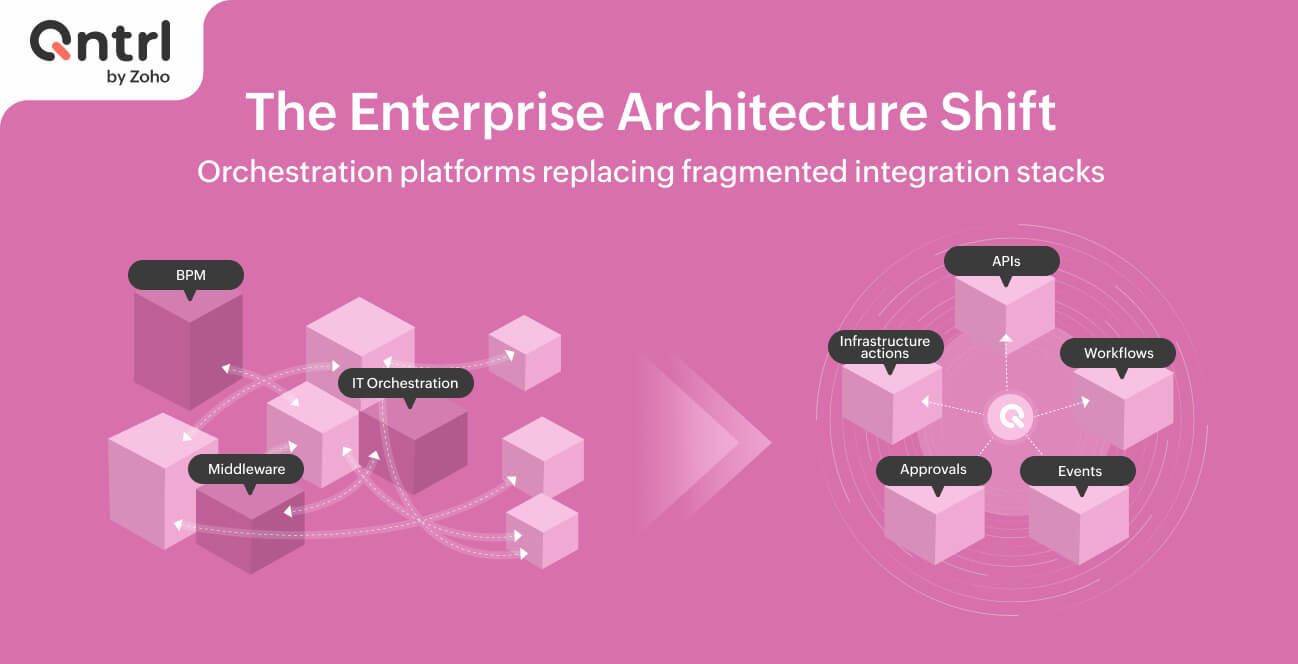
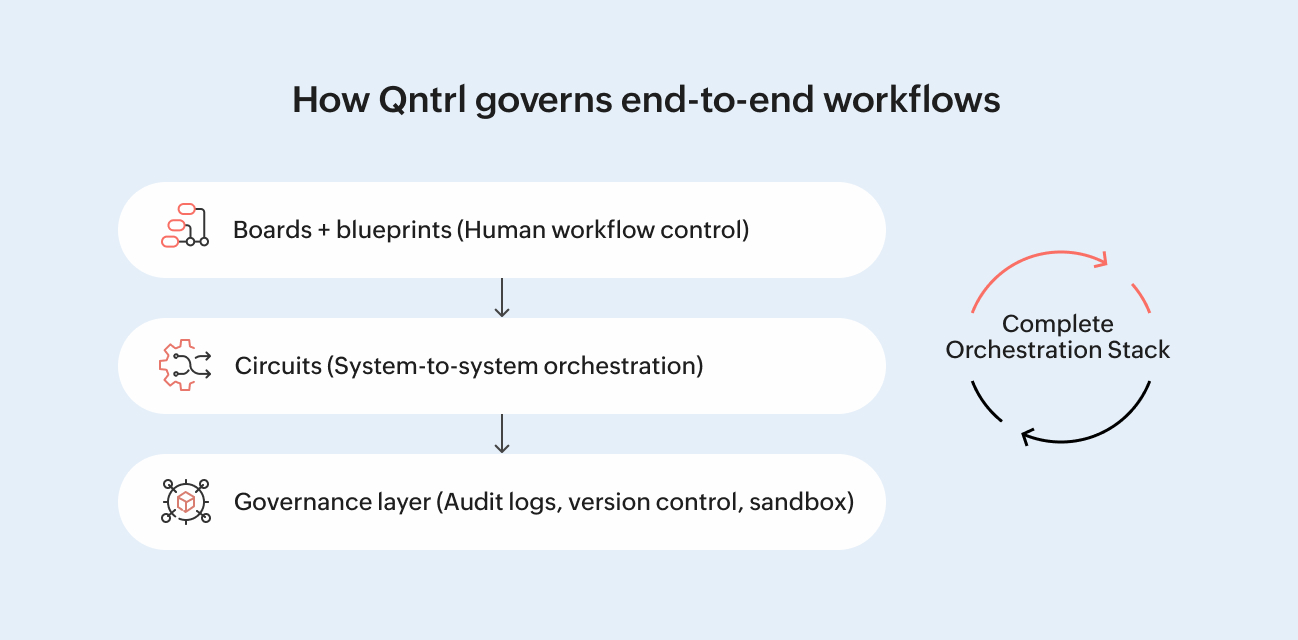
Qntrl is designed to provide enterprises with a central platform to design, automate, and enforce IT workflows with the right level of control. It brings together BPM, IT orchestration, and middleware capabilities under one studio.
Here is how it works:
Boards and blueprints create structured, enforceable processes
Boards serve as operational workspaces where IT tasks, change requests, and approvals are processed through defined stages.
Blueprints are the rule engine behind every board, defining:
- Who can move work forward
- Which actions need approval
- What conditions must be met
- What automations run at each stage
- What data must be captured for compliance
This ensures that every provisioning request, configuration change, or IT workflow follows a predictable and repeatable path with zero ambiguity.
Examples include:
- Security review → manager approval → IT validation → deployment
- Vendor onboarding → contract review → risk assessment → access provisioning
- Incident escalation → RCA workflow → closure documentation
Every step is traceable, consistent, and aligned with organizational policies.
Orchestration circuits automate IT tasks behind the scenes
While boards and blueprints manage the human side of operations, circuits handle system-to-system orchestration.
Circuits allow IT teams to automate:
- API calls
- Role provisioning
- Data synchronizations
- Ticket creation
- Updates across systems
- Notifications and escalations
- Error handling
- Scheduled jobs
This reduces manual tasks that slow down workflows and introduces zero-touch steps where possible.
Examples:
- Automatically create AD accounts when HR approves onboarding
- Sync user roles between identity systems and internal apps
- Trigger configuration updates after change approval
- Push ticket updates across ITSM and internal apps
By linking human approvals with system actions, Qntrl establishes a governance layer that spans the entire process.
Built-in audit logs provide full traceability
Qntrl keeps a complete history of:
- Every action
- Every approval
- Every field update
- Every system call
- Every process version change
Audit logs are automatically captured, no one needs to manually maintain them. This matters when you need to:
- Prove compliance
- Show approval lineage
- Demonstrate risk evaluation
- Trace who made changes and why
- Validate that processes followed policy
For enterprises with strict regulations (finance, healthcare, manufacturing), this is essential.
Version control + sandbox testing prevents risky deployments
One of the most significant governance gaps in IT automation is the lack of control over workflow changes.
Qntrl solves this with:
- Full workflow versioning
- Safe sandbox environments
- Controlled publishing
- Access controls for who can modify workflows
- Side-by-side comparisons of versions
Teams can test updates, validate integrations, and review automation logic before deployment.
This results in:
- Fewer production surprises
- Safer automation rollouts
- Consistent behavior across departments
- Stronger compliance alignment
Qntrl supports compliance-grade operations out of the box
Enterprises use Qntrl to enforce:
- SLAs for task completion
- Multi-level approvals
- Mandatory documentation
- Controlled handoffs
- Encryption and secure data handling
- Role-based access
- Governance over both human and automated actions
This lets enterprises replace informal, risky workflows with structured, audit-ready processes that scale.
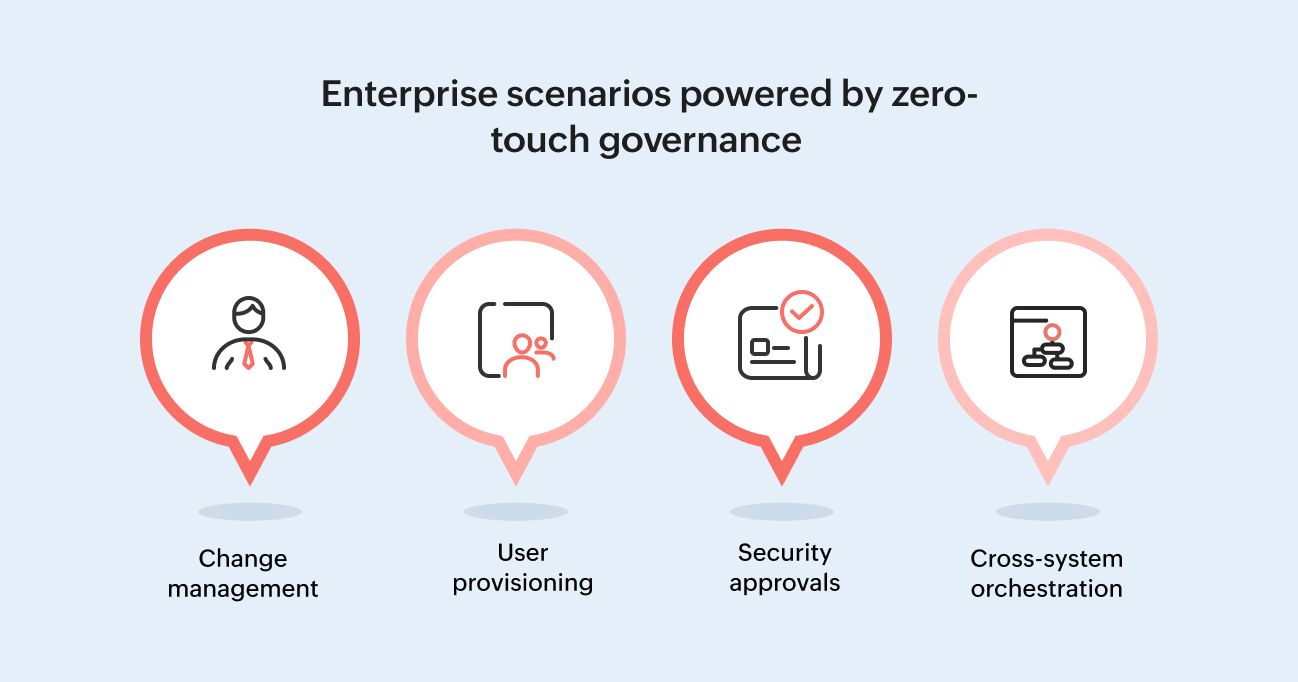
Where Qntrl delivers governance and zero-touch execution
Change management
Changes are reviewed through recorded approvals, validations, and automated deployment actions, with sandbox testing conducted before rollout.
User provisioning and deprovisioning
HR submits a request → approvals flow → circuits are provisioned automatically → every action is logged in a document.
Security and compliance workflows
Risk assessments, access reviews, policy checks, and vendor security steps each follows an enforceable blueprint.
Cross-system IT orchestration
Qntrl acts as the governance layer between identity systems, ITSM tools, HR platforms, finance systems, and internal applications.
In each case, the result is the same:
Complete visibility + predictable processes + zero-touch execution where possible.
The outcome: Full audit control without manual compliance chasing
By embedding governance into workflow design, automation, and orchestration, Qntrl helps enterprises:
- Reduce operational risk
- Increase audit readiness
- Standardize IT operations globally
- Eliminate manual steps that slow teams down
- Improve SLA compliance
- Strengthen visibility and reporting
- Maintain consistent controls across systems and teams
Instead of scrambling during audits, teams operate with clarity from the start.
Instead of managing fragile workflows, IT runs on a structured engine.
Instead of juggling systems, Qntrl unifies governance across processes, people, and data flows.
Discover how Qntrl enables IT operations to be audit-ready from day one.
Book a demo and explore the orchestration engine built for enterprise governance.

Enjoying your reading?
Enjoy organization and visibility too!
Qntrl can help you organise, control and improve production and projects in your team.